
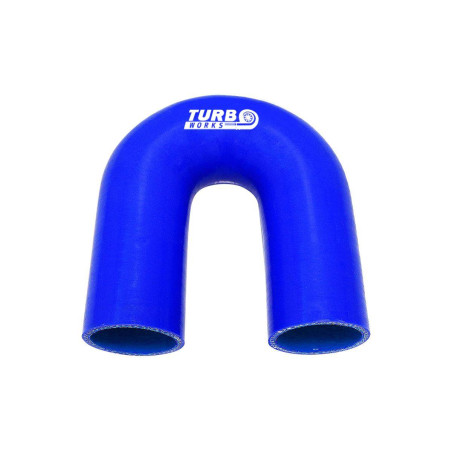
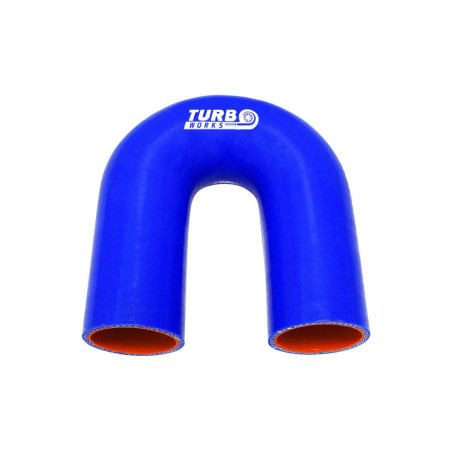
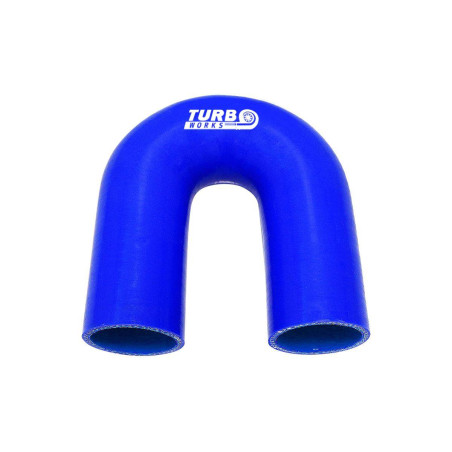
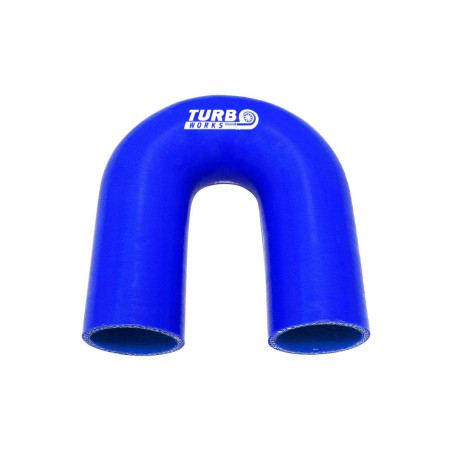
180° elbows
There are 8 products.
Popular parts and accessories
The products most frequently chosen by our customers


When there isn’t enough space in the engine compartment to route a hose in a wide curve, you need a component that will redirect the flow without having to add several connectors. An 180-degree silicone elbow solves this problem, as it allows for a full turn, seals the hose connection and withstands vibrations better than soft rubber alternatives.
Read moreWhat is a 180-degree silicone elbow used for?
It is a reinforced fitting in the form of a full bend, used mainly in the intake system. Silicone performs reliably under changes in temperature and pressure, which is why this component helps maintain a tight seal where the hose needs to make a 180-degree turn.
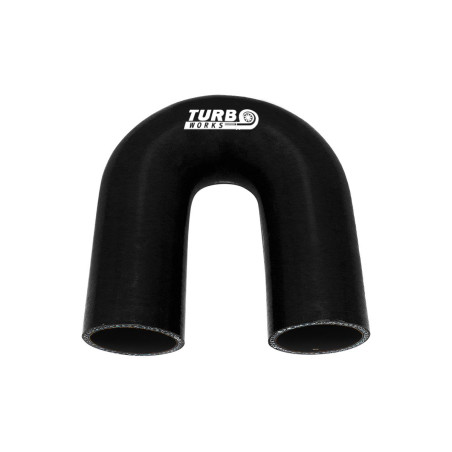
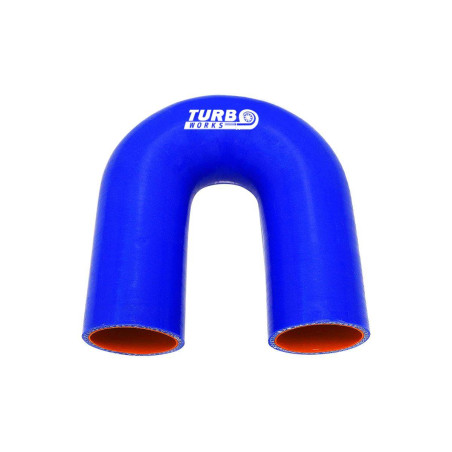
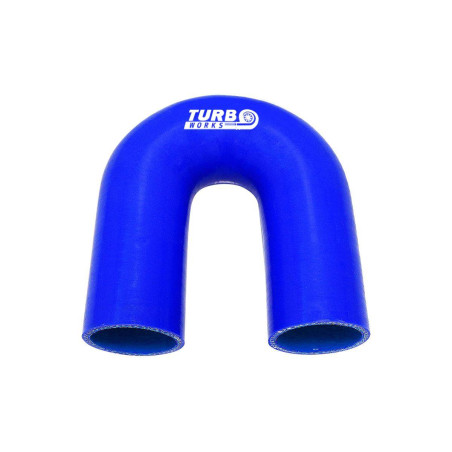
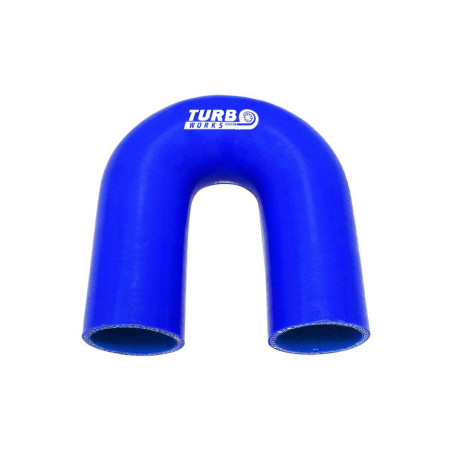
Nominal diameters of 25, 45, 51, 57, 60, 63 and 70 mm are available in this category. The 25 mm variant comes in black and blue, whilst the other diameters are available in blue. The colour is for aesthetic purposes, whilst the choice of the correct size depends on the diameter and operating conditions.
In practice, a single 180-degree bend is often preferable to two 90-degree elbows, as it reduces the number of clamps and potential points of leakage. In confined spaces, this is of real importance.
How do you select the size and operating parameters?
Selecting a 180-degree silicone elbow begins with measuring the external diameter of the pipe or hose connection, ideally with a calliper, rather than measuring an old, deformed hose. The nominal diameter of the elbow should match the diameter of the component being inserted, as a connection that is too loose will result in air leakage, whilst one that is too tight will make installation difficult and may damage the pipe wall.
When selecting a fitting, check the following first and foremost:
- the nominal diameter in mm and compatibility with the spigot
- wall thickness of 5 mm to 6 mm and its effect on the clamp’s clamping force
- reinforcement with a four-layer braid and shape retention under pressure
- temperature range from -50 °C to +260 °C and a pressure test up to 7 bar
These parameters contribute to durability. The four-layer braiding stabilises the shape of the elbow, whilst thermal resistance reduces the risk of the material softening in the hot engine compartment. If the system operates under boost, the pressure strength margin limits changes in the hose’s cross-section and fluctuations in flow.
How can you recognise good quality and when should you replace the elbow?
You can recognise a genuine 180-degree silicone elbow by checking that the technical specifications and dimensions match the TurboWorks manufacturer’s description, as well as by the wall thickness, which varies depending on the variant. In practice, quality is evidenced by a tight seal after fitting, stable clamping force from the clamps, and reduced susceptibility to swelling as pressure increases.
The signs of wear are clear. Look for cracks at the ends, abrasions from clamps, deformation of the bend, traces of oil, and areas where the material has become too soft or unnaturally hard. Fit the elbow onto a clean, smooth pipe end with no burrs; the clamp should grip a straight section of the pipe, not just the bend radius itself. Before sliding it on, also check that the wall does not twist once the clamp is fitted.
FAQ
What diameters and colours are available for 180° elbows?
Nominal diameters: 25, 45, 51, 57, 60, 63 and 70 mm. The 25 mm variant is available in black and blue; the other diameters are available in blue. Colour is mainly a matter of aesthetics; the diameter and operating conditions are the key factors.
How should I fit the elbow and clamp to prevent leaks?
Measure the pipe end with a calliper and select an elbow with the correct nominal diameter; fit it onto a smooth pipe end free from burrs. The clamp should grip a straight section of pipe, not the bend radius. Check that the pipe wall is not twisted and that the joint is leak-free after installation.