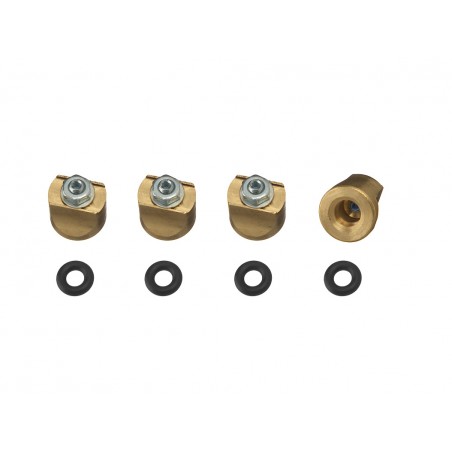
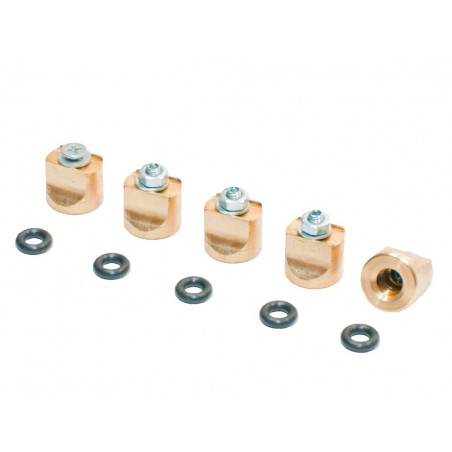
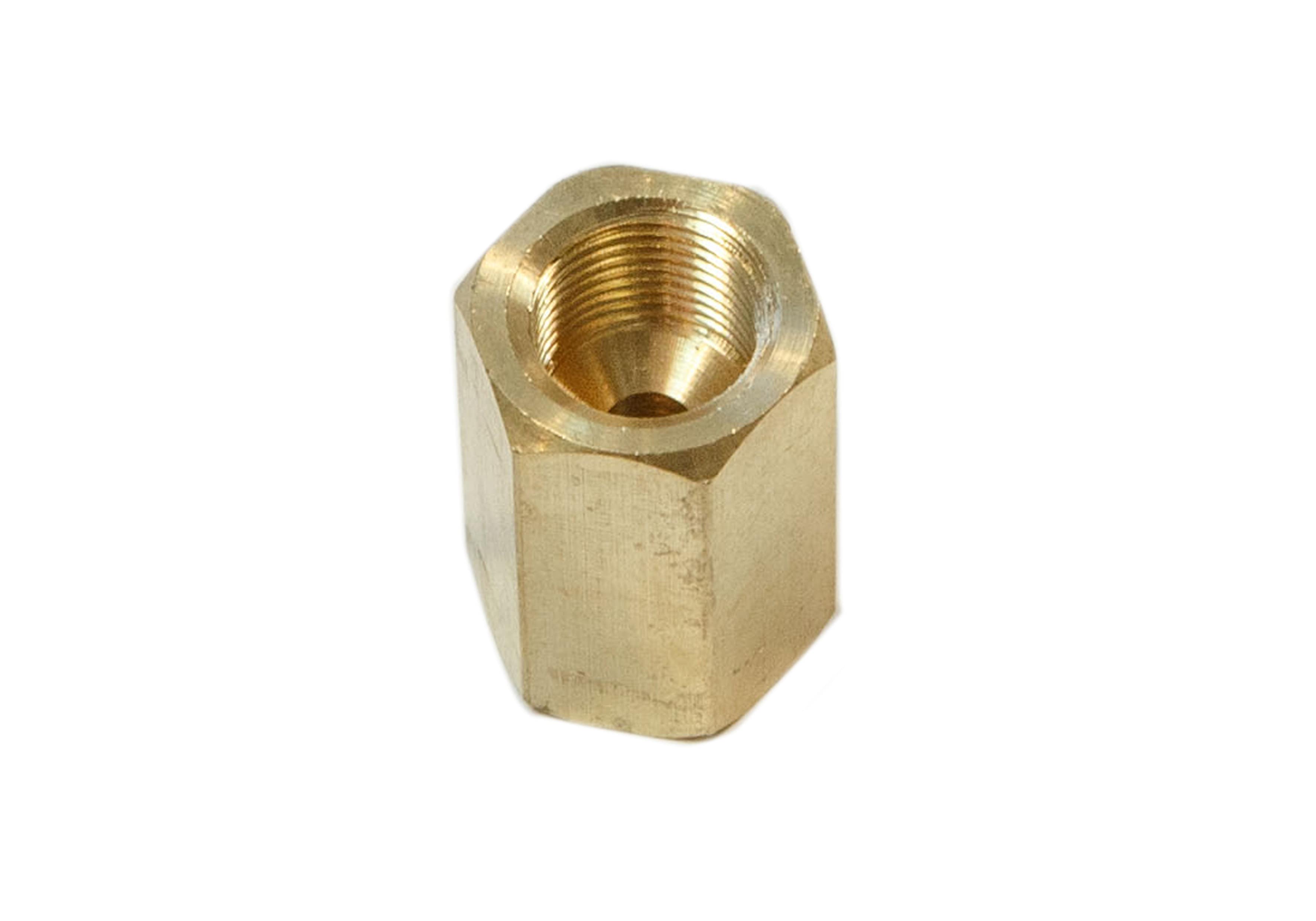
BRAKE HOSE COUPLING, DOUBLE CONNECTOR, M12x1

Product code AT-EPO-649 EAN 5904276580059
Quantity:
Gross price
Price:
12.00
Tax included
- Delivery: Courier (free of charge)
- Delivery: 1–2 days
Secure payments
Manufacturer’s warranty
Help with choosing
M12x1/M12x1
Brake Line Coupler Used to connect two sections of brake lines.
Used in the braking systems of light commercial vehicles and passenger
cars The connection is sealed by properly crimped ends.
TECHNICAL SPECIFICATIONS:
internal thread: M12x1/M12x1
Total length: 23
mm Crimp type: SF/SF mushroom
Material: brass
Made of high-grade brass, this product is of the highest quality, ensuring consistent compliance and repeatability of parameters such as threads, diameters, and length
. Advantages:
Quick installation—you can do it yourself.
The M12x1 brake line fitting allows you to connect two sections of brake line in the braking system of a passenger car or light commercial vehicle. The M12x1 internal thread on both sides, a length of 23 mm, and the SF/SF mushroom-type socket allow for quick assembly of the connection, provided that the hose ends are properly crimped.
What is the M12x1 brake line coupling used for?
The M12x1 brake line fitting is used to permanently connect two sections of the brake system. The seal is achieved at the hose ends, not at the thread itself; therefore, a matching thread and properly crimped ends are essential.
Brake hose fittings are primarily classified by thread type, diameter, length, and crimp type. This variant is a brake hose fitting with an M12x1/M12x1 thread and an SF (mushroom-style) crimp on both ends.
| Internal thread | M12x1 / M12x1 |
| Total length | 23 mm |
| Clamp type | SF / SF mushroom |
| Material | brass |
| Application | brake systems for passenger cars and light commercial vehicles |
What are the practical benefits of a brass brake line connector?
A brass brake line connector, made of brass, features a consistent thread and stable dimensions, and reduces the risk of damage during tightening. In practice, this makes it easier to screw in, reduces the likelihood of thread stripping, and ensures proper seating of the hose end.
The brass body is short, compact, and noticeably heavier than its 23-mm size would suggest. The smooth thread coils are palpable, with no sharp edges, and uniform resistance is felt when tightening.
Key features include:
- a brass body that helps maintain the thread’s shape, diameter, and length
- a short design that facilitates installation in tight spaces
- an SF/SF socket compatible with mushroom-head terminals
- quick installation that can be done by yourself
If you’re looking for a brake line fitting for a specific thread or are completing a set of brake line fittings, this option allows you to make an M12x1/M12x1 connection without mixing different standards.
How do you check the fit and leak-tightness of the connection?
The brake line fitting must fit precisely, as the braking system does not tolerate even a slight error in thread pitch. Before installation, check the M12x1 designation, the type of hose end, and the condition of the sockets and threads.
A properly selected brake line fitting screws in by hand, without any sticking during the first few turns. Forcing the connection with a wrench usually results in thread damage or a leak.
Does this model fit any hose?
The M12x1 brake line connector is not universal. It fits only when both sections have an M12x1 thread and the line ends are of the standard SF mushroom type. This is not a crimp-free solution, as the seal is ensured by properly crimped line ends.
How can you tell if there’s a problem after installation?
A leaky brake line fitting makes itself known immediately. Traces of fluid near the fitting, moisture on the line, a spongy brake pedal, or signs of corrosion around the connection mean you need to check the installation immediately. Check the connection for leaks visually after pressurizing the system and again after a short test drive.
How do you replace a brake line fitting?
Replacing a brake line fitting is simple if the thread and fittings are correctly matched. The installation itself takes little time, but the connection must be made carefully and without rushing, because even a small amount of dirt on the socket can prevent the fitting from seating properly.
The most common mistake is starting to tighten it with a wrench right away instead of by hand. To do the job, you’ll need:
- a brake line wrench of the appropriate size
- hoses with properly crimped fittings
- a cleaning cloth and a degreaser for the installation area
- brake fluid for topping off and bleeding the system
Perform the installation in this order:
- Unscrew the old fitting and inspect the condition of the hose ends
- Screw both ends in by hand to avoid damaging the threads
- Tighten the connection gently on both sides
- Check for leaks, top off the fluid, and bleed the system if necessary
The product includes only the M12x1 fitting. Hose ends and the brake hose must be selected separately.
FAQ
What type of hose fittings are compatible with this connector?
The fitting requires SF fittings, also known as “mushroom fittings,” on both ends. It is the properly crimped fittings that ensure the connection is leak-tight, not the M12x1 thread itself.
Does the M12x1 connector ensure a leak-tight seal without crimping the fittings?
No. A leak-tight seal is achieved through properly crimped hose ends; the thread merely connects the components. Failure to crimp the SF ends results in leakage and the risk of a leak.
What tools and steps are needed to replace the fitting?
You’ll need a brake line wrench, a cleaning cloth, a degreaser, and brake fluid. Procedure: unscrew the old fittings, screw in the new ones by hand, tighten them, check for leaks, and bleed the system.
Brake line connector M12x1/M12x1
| Safety information | Install the product in accordance with its intended use. Before installation, check the condition of the product and ensure it is suitable for the intended application. Installation should be carried out by a person with the appropriate technical knowledg |
|---|---|
| Manufacturer’s code | AT-EPO-649 |
Recommended